There are questions that humanity has been asking itself for centuries. One of them concerns the face of the man who changed the course of history—not as an abstract figure, but as a real man with distinct features and a gaze that billions of people have tried to imagine. Today, thanks to science and one of the most studied objects in the world, the question of what Jesus’s true face looked like has an answer that is closer to the truth than ever before.
What is the Shroud of Turin, and why does it continue to fascinate the world?
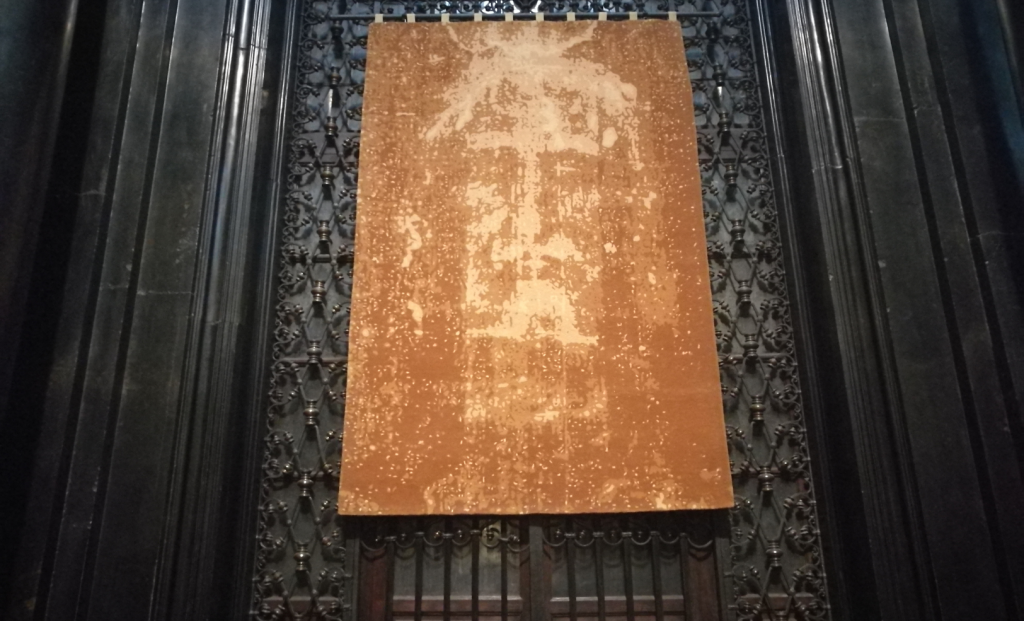
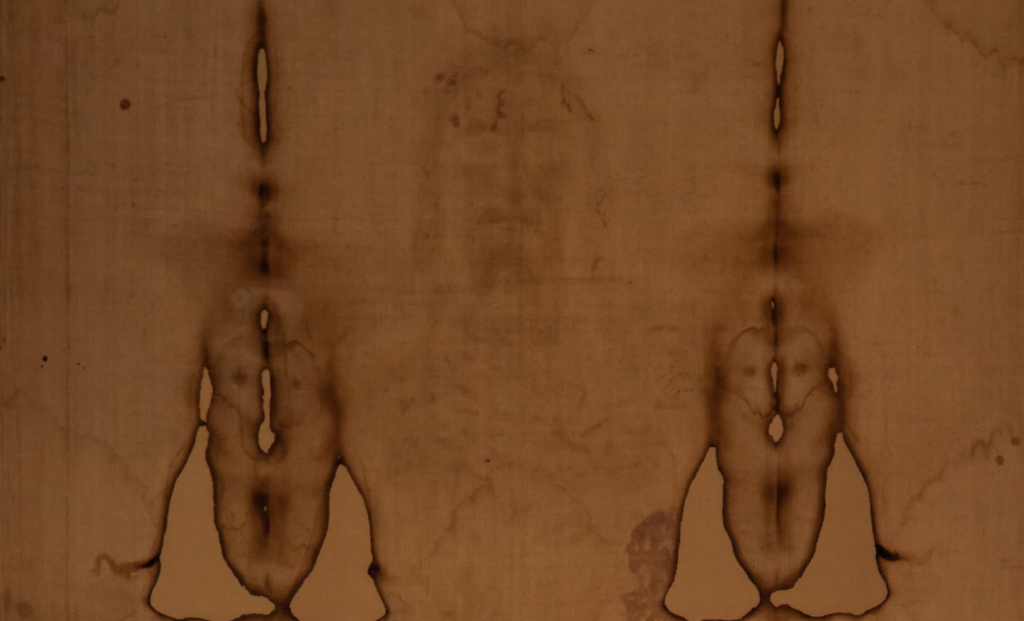
The Shroud of Turin is a linen cloth over four meters long that bears the image of a man who, according to Christian tradition, is Jesus Christ. It has been kept in the Cathedral of St. John the Baptist in Turin since the 16th century, and every time it is put on public display, millions of people travel to see it.
What makes the Shroud of Turin unique is not just its age. It is the fact that no one has been able to explain with certainty how the image was formed. It is not a painting; there is no pigment. The imprint is superficial, affecting only the outermost fibers of the fabric, and it shows anatomical details that no medieval artist could have reproduced with such precision. That is what keeps the debate alive, between those who consider it an authentic relic and those who see it as an extraordinary historical phenomenon.
The Face of Jesus and the Shroud of Turin: The Reconstruction That Changed Everything
Using the image of the Shroud, several teams of scientists and forensic experts have worked to reconstruct Jesus’s true face in three dimensions. The method combines photogrammetry, forensic facial reconstruction, and digital imaging technology. The result is a face with Semitic features, long hair, a beard, a prominent nose, and an expression that conveys something difficult to put into words.
What surprises researchers of these reconstructions most is the consistency among the various teams that have worked independently. The features essentially match. This is not an artistic interpretation, but rather the result of applying scientific methods to the available physical evidence. What Jesus’s face looked like is no longer merely a matter of faith but has become the subject of rigorous research.
The Boadilla Monument: When Science and Faith Come Together
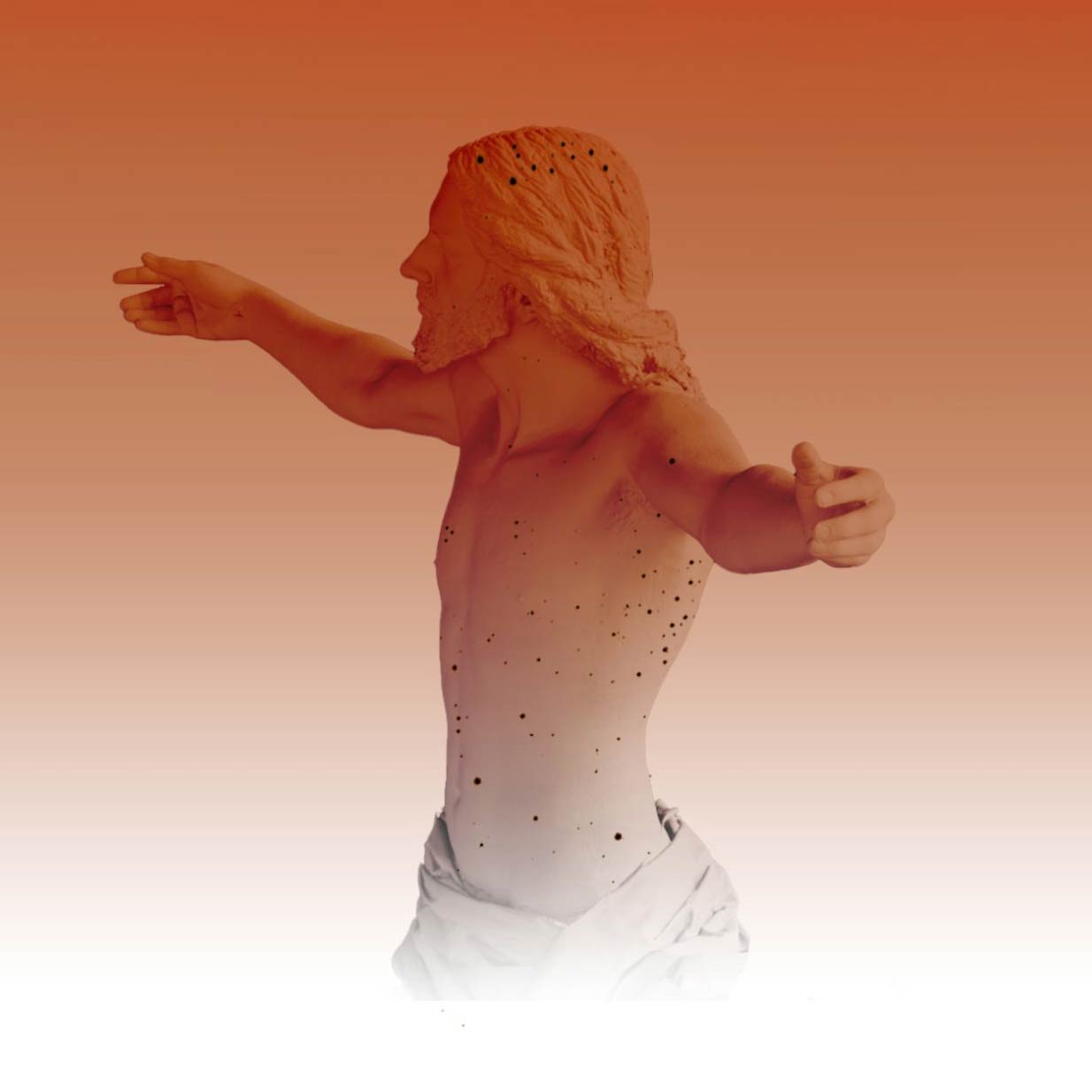
At the Monument to the Sacred Heart of Jesus in Boadilla del Monte, we have taken this idea further than in any previous project. We have worked with a technical and scientific team to incorporate a three-dimensional reconstruction of the face from the Shroud into the 37-meter-tall monument, which will be erected in Boadilla del Monte, Madrid.
This means we are not content with a conventional artistic representation. We want the face of Christ gazing toward the horizon from our Monument to be as faithful as possible to the available historical and scientific evidence. Contemporary art, forensic research, and devotion working together toward a common goal.
The project’s key features are as follows: a 37-meter-tall figure with a wingspan of nearly 60 meters; a reconstruction of the face based on the Shroud of Turin; an interior open to visitors offering a fully immersive sensory experience; and a location between the M-50, the Financial District, and the M-501, visible from miles away.
What you'll experience inside the monument
What sets our Monument apart is not just its scale. It’s what happens inside. We have designed an immersive experience intended to engage all five senses. Upon entering the interior of the Monument to the Sacred Heart, you will hear the slowed-down beating of Jesus’ heart—the same one John heard when he rested his head on His chest. You will be able to perceive the scent of His presence, just as Mary Magdalene did in the garden. Light will stream in each morning through the wound in His side, facing the rising sun, and will descend to the floor as a sign that is renewed every day.
The experiences we have designed for the interior are as follows: listening to the heartbeat of Christ through a sound installation; touching the texture of the wounds, as Thomas did; contemplating the golden light streaming through the side at dawn; tasting the Eucharistic bread; and using the aroma as an element of meditation.
It’s not a monument to be viewed from the outside. It’s a place to step inside, to linger, and to return to.
Donate or join Transfiguración
The Monument to the Sacred Heart of Jesus in Boadilla del Monte is funded entirely by private donations. No public subsidies, no institutional backing. Just people who believe that something like this deserves to exist.
You can donate to the project here and your name will be inscribed in the heart of the Monument. You can also subscribe to the Transfiguración magazine, for those who want to continue exploring the frontier where sacred art and faith meet.
Jesus' face will soon gaze out from Madrid toward the horizon.